
Rapid pace of change in challenging times
ICA Gruppens past year was marked by continued investments in price and value for money, combined with significant investment in logistics, warehousing and IT. Major investments included divesting Rimi Baltic, deciding to implement an extensive organisational change and completing a number of large real estate transactions. The overall result was enhanced competitiveness, increased internal efficiency and freed up resources for future initiatives in several key areas.
Nina Jönsson President and CEO

Read the CEO’s comments
Altogether, 2025 was a strong year for ICA Gruppen. Sales were up just over 5% for ICA Sweden and were driven both by food price inflation and by higher volumes. Costs related to organisational changes and continued high investments in pricing, promotions and logistics negatively impacted earnings.
Apotek Hjärtat increased sales almost 6% driven by rising average prices and a positive volume trend for prescriptions. Despite major investments in IT development, the year was the second strongest to date in terms of earnings.
For ICA Real Estate, the main focus was on supporting, strengthening, and developing ICA’s store network and logistics. During the year, several strategically important acquisitions were also completed.
ICA Bank posted a strong year in terms of earnings, mainly due to lower credit losses. In parallel, total income declined due to lower net interest income and net commission income. ICA Insurance posted healthy growth and strong earnings.
Altogether, ICA Gruppen’s net sales increased to SEK 142.4 billion during the year, up 5.2% year-on-year. Operating profit excluding items affecting comparability and effects from IFRS 16 Leases amounted to SEK 4.8 billion (5.3), corresponding to an operating margin of 3.4% (3.9). Net debt decreased slightly more than SEK 5 billion to SEK 9.3 billion, mainly due to strong cash flows and the divestment of Rimi Baltic. It is worth noting that, even with the major real estate acquisitions, we have reduced our net debt around 50% over the past two years.
Strong focus on price and value for money
During the year, considerable focus was devoted to ensuring attractive purchasing prices for the independent ICA retailers. These efforts included price reductions on a large number of everyday items, continued development of private label products and campaigns under the Stammis loyalty programme.
Increased customer focus on price is here to stay. Despite an increased optimism and purchasing power over the year, many households are still struggling with their finances, an area where we have a key role to play.
While we have no control of independent ICA retailers’ pricing, by providing good purchase prices, we create the preconditions that enable them to provide a strong offering for all types of wallets. The government’s decisions to temporarily reduce VAT on food from 1 April 2026 and to lower employer contributions for young people, are welcome additions in this regard. Lower VAT on food will ease financial pressure on struggling households and lower employer contributions will contribute to more jobs and boost competitiveness across the food supply chain.
Rapidly changing trends and markets
Strong focus during the year was placed on adapting to a rapidly changing business environment and market landscape. Key components in these endeavours entailed simplifying our structure and ways of working, and accelerating decision-making, while also freeing up resources for forward-looking initiatives and business-oriented innovation. Numerous trade-offs were required and the decisions have not always been easy to take.
To increase our own efficiency and competitiveness, we decided a number of major organisational changes during the year. In brief, these entail refining ICA Gruppen’s role as the Parent Company and implementing new management structures at Group level and in many of our operating companies. The changes are aimed at reducing costs and streamlining internal working methods, and thereby, enable growth through stronger customer offerings and enhanced support for the independent ICA retailers.
Major events included the divestment of Rimi Baltic, ICA Gruppen’s wholly-owned grocery retail operations in Estonia, Latvia and Lithuania. We are proud of how Rimi has performed and the strength of its market position today. The reason for the divestment was simple – we have no ambition to expand outside of Sweden and the divestment makes resources available for investments in our home market. The transaction resulted in cash flows of some SEK 9 billion. These funds will now be used, inter alia, for continued investment in strengthening and expanding customer offerings.
Broad social commitment
In parallel with structural changes, we have continued to work based on our ambition of being a positive force that benefits both society and individuals. Our local presence across Sweden entails great responsibility and substantial opportunities to make a real difference.
Our double social responsibility
Higher costs have not just impacted consumers and customers, they have also affected farmers and food producers. ICA Sweden has long been extensively engaged in initiatives to facilitate for local suppliers. These efforts intensified over the last year and included continued initiatives together with the Federation of Swedish Farmers (LRF). This is important work, both as a response to customer demand for locally produced items, and to support farmers and a thriving Swedish agricultural sector. However, they also aim to secure stable domestic food production and increase food security. In the early 1990s, Sweden’s farmers produced approximately 75% of the country’s food – today, around 50% of everything we eat is produced outside the country. Given the developments in the world around us, this needs to change.
Securing robust systems and stable supply chains requires collaboration between businesses, civil society, authorities, regions and municipalities, and the increase in dialogue we have noted in the year marks an important step in the right direction.
A more sustainable food supply chain
The last three years have been the warmest on record. Emissions from the food industry are responsible for a significant portion of climate impact and, naturally, as an important actor in society we have a particular responsibility. In our own operations, emissions decreased by more than 40 percent during the year. We will continue to work on this, of course, but to make a more extensive change we need to reduce the overall climate footprint all the way from food production down to consumption. This means reducing the impact of the products sold in ICA stores and pharmacies as well as changes to the assortment and various ways of stimulating and encouraging customers to choose more foods with a lower impact. The target is to reach net zero climate impact across the entire value chain by 2050.
Påfart ICA
Our community engagement spans many areas. Påfart ICA, a new internship programme aimed at people who have been outside the labour market for at least six months, was launched during the year. Offering training and in-store work experience provides an opportunity for people to find a way to re-enter the labour market. Almost 40 ICA stores were involved in the project at year end, which is being conducted in close collaboration with the Swedish Public Employment Service. The target is for 1,000 participants to have completed the programme by the end of 2027.
Future focus
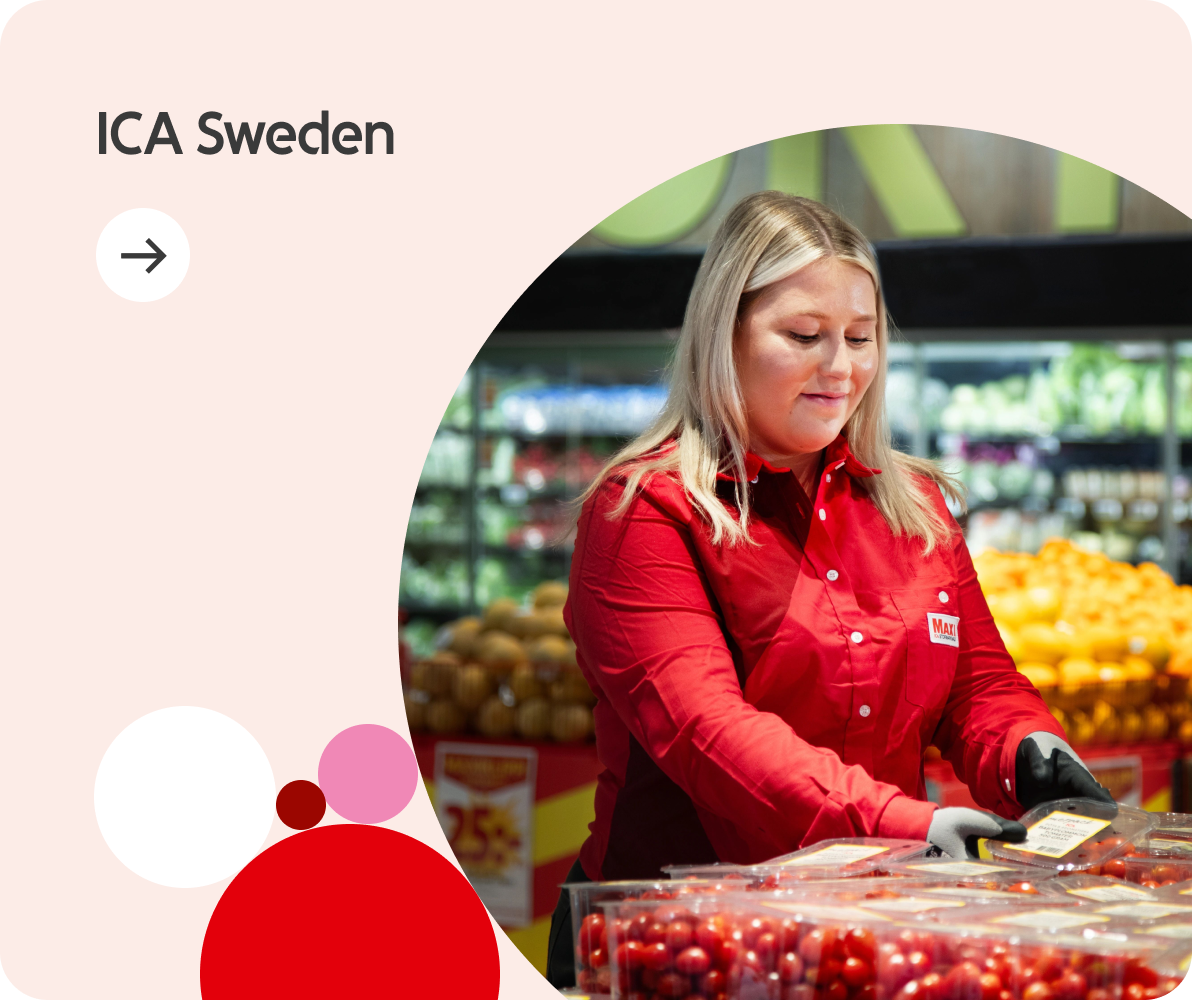
We enter this new year in a position of strength. We have a stable platform setting favourable conditions for continued profitable growth. We also have a clear vision of how we will continue to develop, both our individual businesses and as a Group. The main focus for ICA Sweden and Apotek Hjärtat is to consolidate and further strengthen their existing strong positions. ICA Sweden will retain a strong focus on pricing and further improving support for ICA retailers. Apotek Hjärtat will continue its initiatives to link physical pharmacies with the e-commerce channel – and concurrently establish new pharmacies in locations close to ICA. Both businesses face substantial investments in logistics, warehousing and automation.
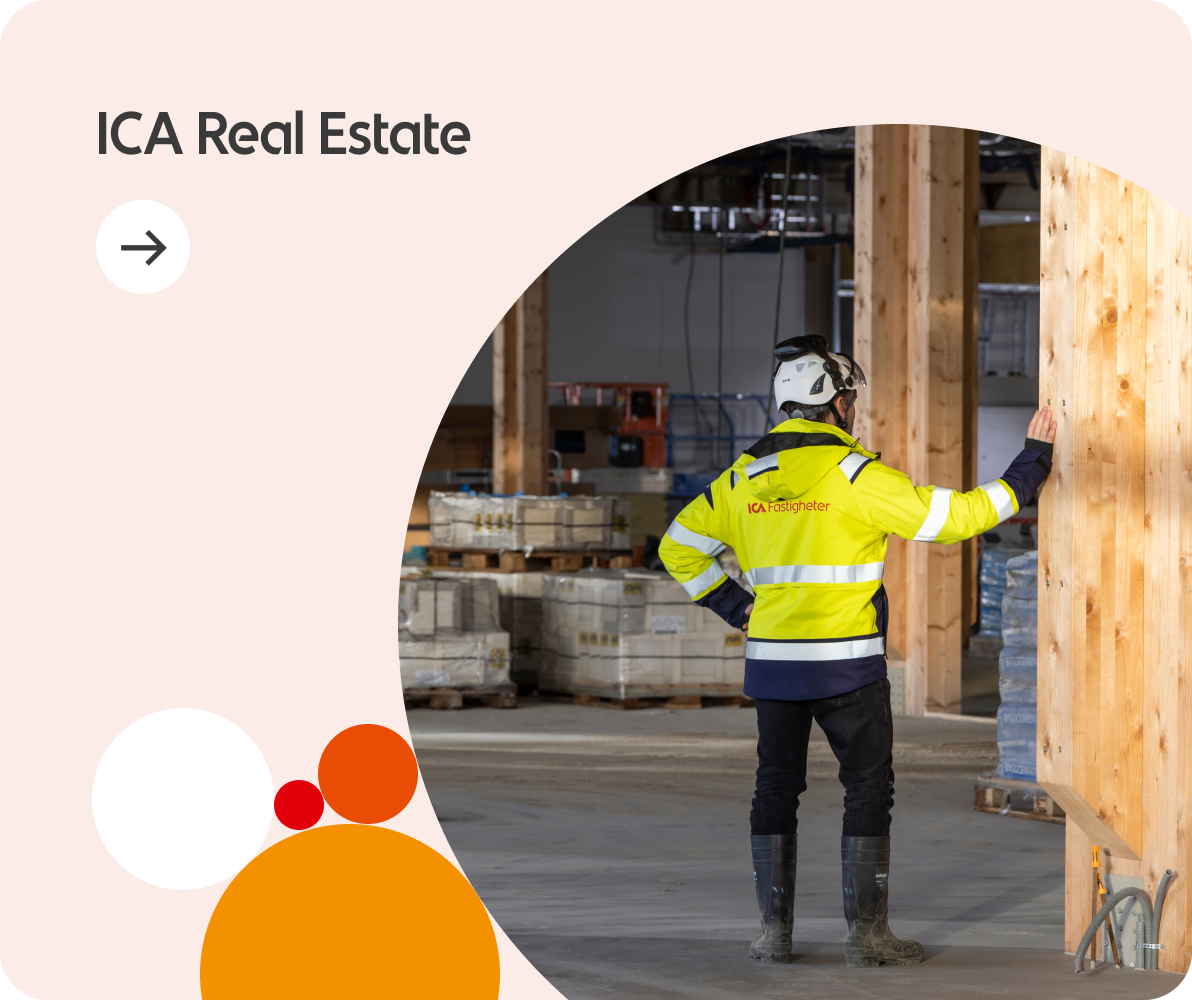
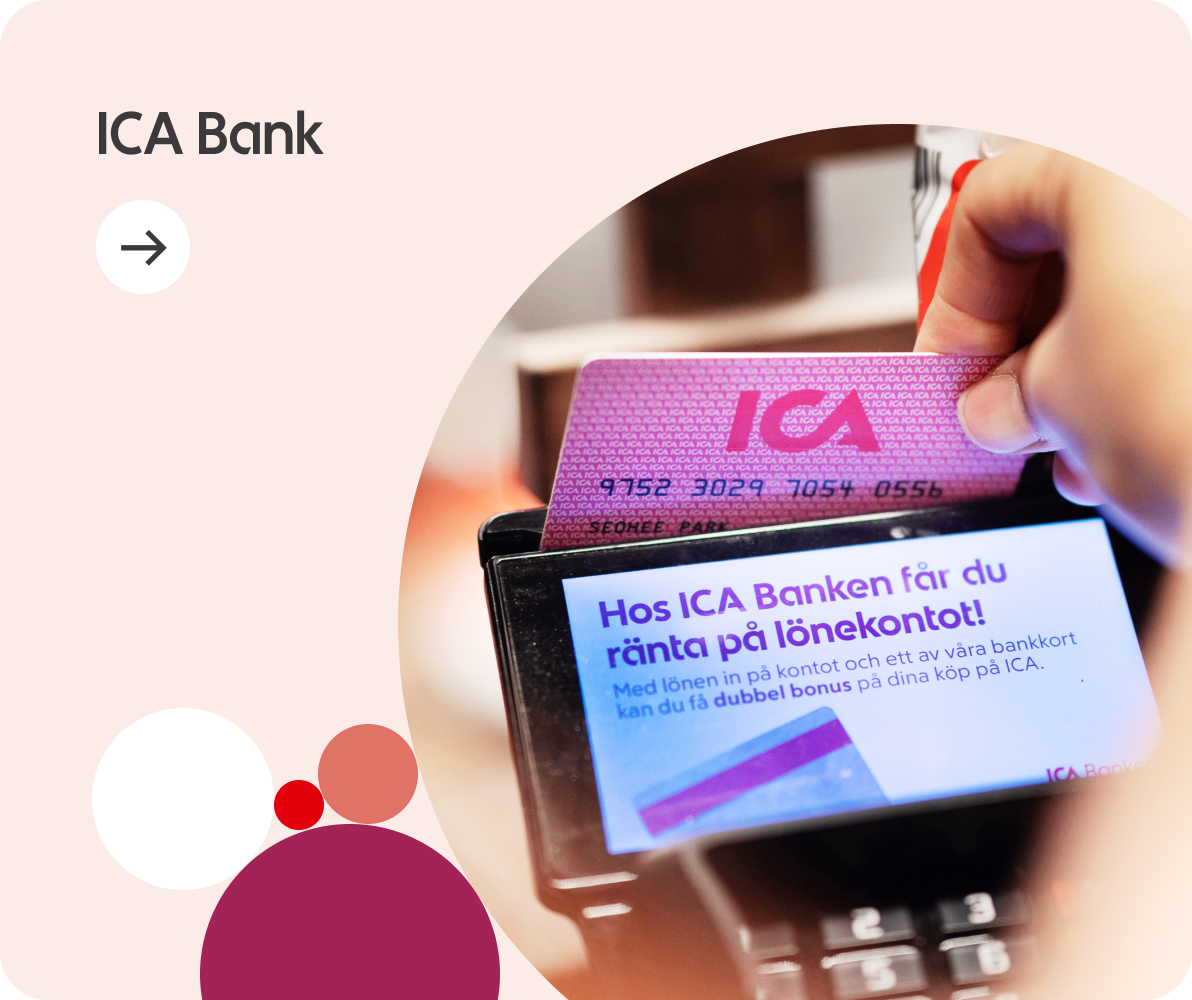
ICA Bank will continue developing everyday banking services in parallel with giving considerable focus to strengthening its position in mortgages. ICA Real Estate will continue strengthening the Group’s competitiveness by securing the right premises in the right locations. Going forward, particular focus will also be on developing the Group’s warehouse and logistics properties.
Beyond business-specific initiatives, we will continue to leverage the Group structure to add value for customers, society and ICA Gruppen as a whole.
Conditions in the world around us and in the market remain difficult to assess, but for the grocery retail market as a whole, many indicators suggest a bright outlook. Food price inflation has slowed and is expected to moderate further in 2026. Signs of increased household optimism are emerging, as evidenced by higher average spends and increased numbers of customer visits.
Individual drive and collective power
One of our greatest strengths is a strong culture in which the retailer perspective, entrepreneurship and the drive to constantly develop are vital components. The ICA Idea, a combination of individual drive and collective strength, has been at the core of ICA’s business model since the start in 1917. Based on this strong foundation, we are now further enhancing our offerings and continuing to create value for customers as well as society at large.
Solna, February 2026
Nina Jönsson
President and CEO
Snapshot of 2025
Key figures 2025
142,403 SEK m
Net sales 2025
5,408 SEK m
Operating profit 2025*
3.8%
Operating margin 2025*
*Excluding items affecting comparability
Strong focus on price and value for money
Ensuring attractive purchasing prices for the independent ICA retailers was given considerable focus in the year. Initiatives included price reductions on a large number of everyday items, continued development of private label products and campaigns under the Group-wide Stammis loyalty programme.
Reduced emissions across the value chain
Work continued during the year to reduce the overall climate footprint all the way from food production to consumption. This entails reducing the impact of the products sold in our stores and pharmacies as well as to changes to the assortment and various ways of stimulating and encouraging customers to choose more climate-smart and sustainable alternatives.
Fossil free goods transports in major cities
The target of fossil free transports in the Stockholm, Gothenburg and Malmö metropolitan regions was met at the start of the year. This was due to a deliberate shift to lorries running on biodiesel and electricity.

Easier to choose green
ICA Gruppen’s ambition is to reduce the climate impact of customers’ grocery purchases 30% by 2030. During the year, ICA Sweden continued various initiatives aimed at stimulating, inspiring and encouraging more climate-smart choices.

Reduced food waste
One third of households’ climate impact is from food and some 8–10% of the world’s GHG emissions come from food that is never eaten. New food waste targets were adopted in 2025 aimed at reducing food waste in own operations 35% by 2030 compared with 2025.

Toward net zero
ICA Gruppen aims to reduce the entire value chain’s climate footprint to meet the Paris Agreement’s 1.5°C goal and to reach net zero climate emissions by 2050. During the year, emissions from own operations decreased by more than 40 percent, mainly driven by reduced emissions from freight transport.
Divestment of Rimi Baltic
ICA Gruppen’s wholly-owned grocery retail operations in Estonia, Latvia and Lithuania, Rimi Baltic, was divested during the year. The divestment proceeds will be used, inter alia, to strengthening and expanding customer offerings in the home market in Sweden.

SEK 56 million to the Swedish Cancer Society
During the Swedish Cancer Society’s Pink Ribbon campaign, ICA stores, Apotek Hjärtat and their customers together raised a total of SEK 56 million for Swedish cancer research in 2025. Since the start of this partnership, ICA and Apotek Hjärtat have jointly donated over SEK 676 million.
Påfart ICA
Påfart ICA, a new internship programme aimed at people who have been outside the labour market for at least six months, was launched during the year. A total of 38 stores were involved in the project at year end. The target is for 1,000 participants to have completed the programme by 2027.
Join the fruit reboot
Only one in ten children eats the recommended amount of fruit. ICA wants the Join The Fruit Reboot initiative to inspire healthy eating habits and break downward trends in fruit consumption.
Supporting preparedness
During the year, ICA Gruppen participated in a number of initiatives aimed at strengthening Swedish preparedness, improving the conditions for national self-sufficiency and strengthening the robustness of the Swedish food system.
Preparedness Week
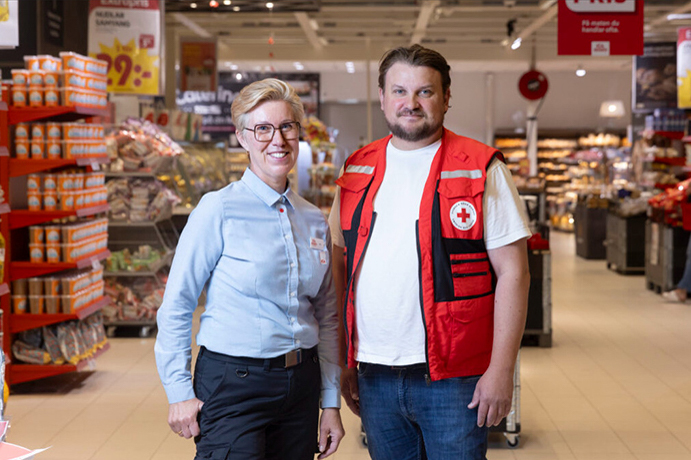
During “Preparedness Week,” the Red Cross was present in hundreds of ICA stores throughout Sweden to provide information about how and why you need to be “crisis ready.” Preparedness Week is an initiative started by the Swedish Civil Defence and Resilience Agency.
Investing in Swedish food production
As part of strengthening robustness in the Swedish food supply chain, initiatives continued during the year to support local food producers. Initiatives include the collaboration with LRF (Federation of Swedish Farmers), which began in 2014.
Our strategy going forward
We make every day a little easier
ICA Gruppen’s long-term direction remains firm. We intend to continue to develop and grow within our core business of grocery retail, but also within our complementary operations. The combination of individual drive and collective strength has been at the core of the business model since the start. The retailer’s perspective, entrepreneurship and local market knowledge are important guiding principles for these efforts. The ICA Idea will remain at the core going forward.
Three areas for collaboration
Developing our businesses – focus going forward

ICA Gruppen’s Annual Report 2025
The full Annual Report, including financial information and the Sustainability Report, is available for download below.
Download Report